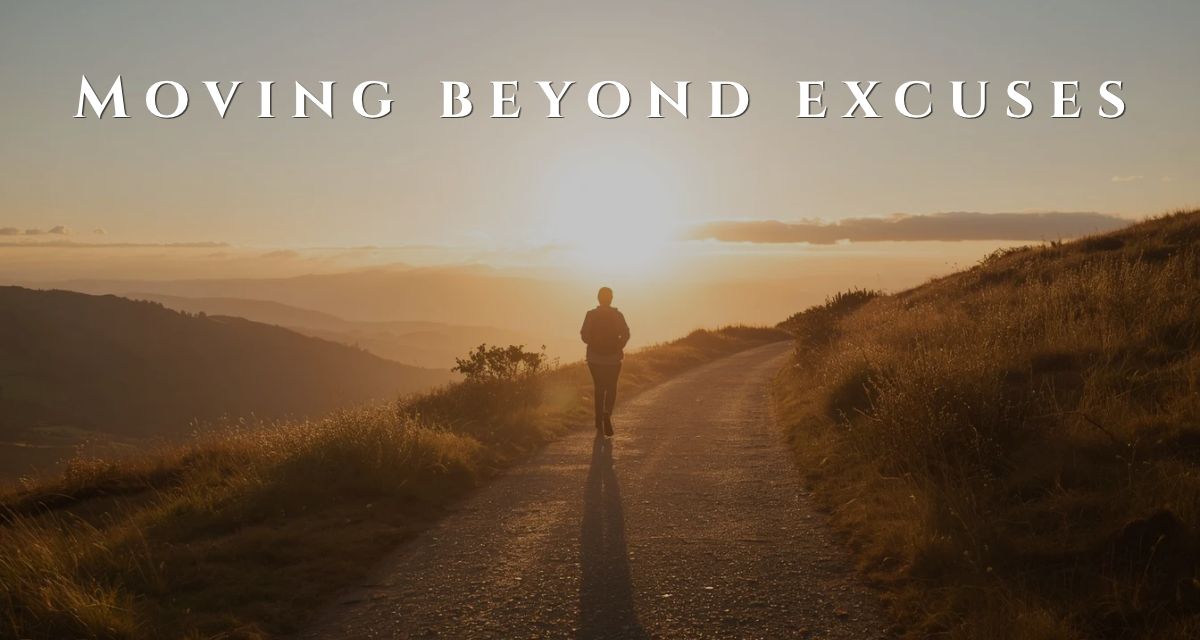
As Edward J. Doherty discussed in his book, Everyone faces moments when life does not go as expected.
A plan fails. An opportunity disappears. A mistake creates a setback. In those moments, it is natural to look for reasons why things happened. Sometimes those reasons are completely valid. Circumstances can be difficult, and many situations are outside our control.
The challenge begins when those reasons stop being explanations and become excuses that keep us from taking the next step.
Moving Beyond Excuses is not about pretending challenges do not exist. It is about recognizing what we can influence and deciding how we want to respond.
Why Excuses Can Hold Us Back
Excuses often begin with something real.
A person may face limited resources, unexpected problems, or circumstances that make progress harder. However, when we focus only on what went wrong, we can lose sight of what is still possible.
The biggest problem with excuses is that they remove responsibility from our hands. They make us believe that change depends entirely on outside factors.
Growth often begins when we ask a different question:
“What can I do now?”
That simple shift moves attention away from blame and toward action.
The Choices We Make Shape Our Future
The direction of our lives is often influenced by choices that seem small at the time.
How we respond after failure. Whether we continue learning after a mistake. The habits we develop when nobody is watching. These decisions may not create immediate results, but they gradually shape who we become.
Taking responsibility for your choices does not mean accepting blame for everything that happens. It means understanding that your response still matters, even when circumstances are difficult.
A setback can become a reason to stop, or it can become an experience that teaches us something valuable.
The choice we make after the setback often matters more than the setback itself.
Choosing Action Over Excuses
Many people wait for the right moment before they act.
They wait until they feel more confident, have more experience, or have fewer obstacles. The problem is that life rarely provides perfect conditions.
Progress usually starts when people take action despite uncertainty.
Someone improving their career may need to begin before they feel fully prepared. Someone recovering from a difficult experience may need to take small steps before they feel completely ready.
Action does not guarantee immediate success, but it creates movement. It provides lessons, builds confidence, and helps people understand what needs to change.
Choosing action instead of excuses means focusing on what can be done rather than what cannot be changed.
What Difficult Experiences Teach Us
Challenges often reveal lessons that are easy to miss during easier times.
A difficult situation can show patience, resilience, and determination. It can also reveal habits or decisions that need improvement.
The value of a setback is not only found in overcoming it. It is also found in what we learn from it.
Asking “Why did this happen?” can sometimes keep us focused on the past. Asking “What can I learn from this?” helps us think about the future.
This mindset aligns with the personal growth lessons hidden in everyday moments, as ordinary experiences often teach us something important when we take time to reflect.
Lessons from Everyday Life
In Observations at the Speed of Life, Edward J. Doherty shares reflections on everyday situations and the lessons they reveal about responsibility, resilience, and decision-making.
The book highlights an important idea: people cannot always control what happens to them, but they can control how they respond.
That perspective changes the way we look at challenges. Difficult moments are no longer only obstacles. They can become opportunities to improve judgment, build character, and make better choices moving forward.
Personal Responsibility Creates Progress
Moving forward does not require having a perfect past.
Everyone has decisions they would make differently. Everyone experiences moments they wish had gone another way. What matters is whether those experiences become barriers or lessons.
Personal responsibility allows people to learn without remaining trapped by past mistakes. It creates space for improvement by focusing on what can be changed.
Progress comes from being willing to adjust, learn, and continue.
Final Thoughts
Challenges are a part of every life. No one can avoid setbacks, disappointments, or unexpected changes.
What separates people is not whether they experience difficulties. It is how they respond when difficulties appear.
Moving Beyond Excuses begins with recognizing the choices available in the present moment. It means accepting responsibility, learning from experience, and taking action even when circumstances are not ideal. The future is not shaped only by what happens to us. It is also shaped by what we choose to do next.